How to Price Catering Jobs (With Examples) (2026)
Quoting a catering job on gut feel is how you end up working a Saturday for nothing. Pricing catering, line by line, with two costed examples.

Room-by-room counting, valuing stock at cost, the COGS formula and reading your variance

Short answer: a stocktake is the physical count and valuation of everything on your shelves, and it is the only way to turn food cost from a guess into a fact. Count the expensive movers, proteins, seafood, and alcohol, weekly, and count everything once a month at a consistent time. Value at last purchase cost, then work out what you actually used with a simple formula: opening stock plus purchases minus closing stock. Compare that real usage against what your recipes say you should have used. The gap is where your money went, and it is almost always worth finding.
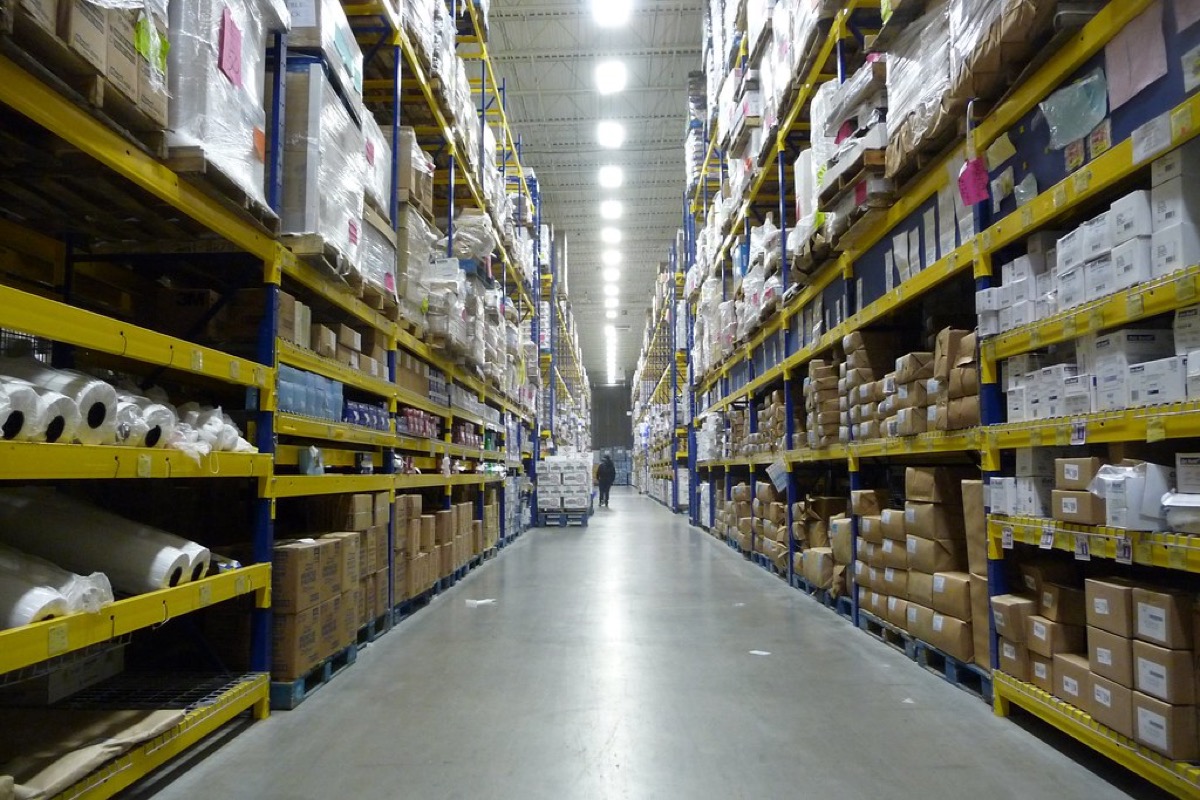
Without a stocktake your food cost is a number you hope is true. Invoices tell you what you bought, not what you used, and the difference is where problems hide. Waste hides inside the word “usage”: a bin full of over-prepped garnish just looks like normal consumption. Theft, in turn, hides inside waste: shrinkage you cannot see gets absorbed into the same fuzzy total. A proper count breaks that fog. It gives you an actual usage figure you can trust, the foundation for pricing, ordering, and knowing whether your margin is real. If you have not nailed the underlying maths, read how to calculate food cost alongside this, because the stocktake is what feeds it.
The count is the diagnostic. The two things it exposes, hidden waste and hidden shrinkage, are covered in depth in inventory management and food waste and restaurant theft prevention. The stocktake is how you find out you have a problem at all; those guides are how you fix it.
Split your cadence by how much a mistake costs you. The expensive, fast-moving items deserve a weekly eye. Everything else can wait for the full monthly count. The rule that matters most is consistency: same day, same conditions, same units, every single time, so your numbers are comparable rather than noise.
| Cadence | What you count | When |
|---|---|---|
| Weekly | Proteins, seafood, alcohol, other high-value movers | Same day each week, after close |
| Monthly | Everything, including dry store, chemicals, packaging | Last night of the month, before deliveries |
Do the full count at end of month, before the next deliveries land and after service has closed, so the shelves are as settled as they will ever be. Counting a stockroom that is mid-restock is counting a moving target.
A stocktake is a walk around the room, not a trip through the dictionary. The single biggest speed win is a count sheet organised by storage location in shelf order, top to bottom, left to right, exactly as the items sit. Alphabetical sheets force you to crisscross the room for every line and are the classic reason a count takes all night. Order the sheet to match the shelves and you count in one smooth pass.
Agreeing units before you start is what stops two counts from disagreeing for no reason. Sealed items are counted as units; bulk items are weighed; a part-used container gets estimated in tenths (a bottle a third full is 0.3). Count the awkward things too, the oil in the fryer, the boxes stacked on the walk-in floor, the half-tub of aioli, because that is exactly where value quietly accumulates and gets forgotten.
Value every line at last purchase cost, the price on your most recent invoice for that item. Not retail, which inflates your stock and wrecks your food cost, and not a stale figure from three months ago. Once the count is valued, you have your closing stock number, and that unlocks the one formula every operator should know by heart: cost of goods sold equals opening stock plus purchases minus closing stock. This actual usage figure beats totalling your invoices, because invoices are what you bought, while COGS is what you genuinely consumed. Only the second number tells you your true food cost.
COGS is one of the two halves of your prime cost, the other being labour; if you want the full picture of your two biggest controllable expenses, see restaurant prime cost. For where the stocktake fits into your monthly books, restaurant accounting basics ties it together.
The count gives you actual usage. Your recipe cards, multiplied by the number of each item you sold, give you theoretical usage: what you should have used if every plate went out to spec. The gap between them, expressed in points of food cost, is the most useful number in the building. Under 2 points is normal friction from trim, spillage, and rounding, and not worth losing sleep over. Over 2 to 3 points is a signal that something is off, and each cause has its own next check.
| Variance | Likely cause | Next check |
|---|---|---|
| Under 2 points | Normal friction, trim and spillage | No action needed |
| Over 2–3 points | Over-portioning | Run a portion audit against recipe cards |
| Over 2–3 points | Waste | Start a waste log and separate it from usage |
| Over 2–3 points | Shrinkage | Apply the theft controls and tighten counts |
Here is what that looks like in dollars. Say you open the month with $8,200 of stock, purchase $11,400, and count $7,900 at close. You used $11,700 (8,200 + 11,400 − 7,900). Against $36,000 of food sales that is a 32.5% actual food cost. Your recipes say you should be running 30% theoretical. That 2.5 point gap is $900 for the month, roughly $10,800 a year, sitting in over-portioning, waste, or shrinkage. That is a staff member’s worth of hours, and it is well worth an afternoon to find.
Everything about a stocktake gets easier with systems. Count sheets that mirror the shelves cut the count from hours to a focused walk. Consistent products and pack sizes cut errors, because the same box always holds the same amount. And the whole discipline compounds: the more months you run it, the sharper your ordering, your pricing, and your instinct for when a number looks wrong. A stocktake is not admin for its own sake, it is the routine that quietly defends your margin, month after month.
How often should I do a stocktake?
Count the expensive movers weekly: proteins, seafood, and alcohol are where money leaks fastest, so a quick weekly count on those catches problems within days. Do a full count of everything once a month, at a consistent time such as the last night of the month, after close and before deliveries. Consistency matters more than frequency: the same day, same conditions, same units every time is what makes your variance numbers trustworthy rather than noise.
How do I value my closing stock?
Value everything at your last purchase cost, the price on your most recent invoice for that item, not the retail menu price and not an old cost. If a 10kg box of chicken thigh last cost you $89, then 4kg on the shelf is worth $35.60. Valuing at retail inflates your stock and hides your real usage. Keep a simple price list beside the count sheet so whoever is recording can multiply as they go, or apply the costs afterward in your spreadsheet.
What does COGS mean and how do I calculate it?
COGS is cost of goods sold, the actual dollar value of stock you used in a period. The formula is opening stock plus purchases minus closing stock. If you opened the month with $8,200 of stock, bought $11,400, and counted $7,900 at month end, you used $11,700. That number beats adding up invoices because invoices tell you what you bought, not what you actually consumed. Divide COGS by sales for the period to get your true food cost percentage.
What is an acceptable stock variance?
Compare your actual usage against theoretical usage, which is what your recipe cards say you should have used for the number of items you sold. A gap under 2 points of food cost is normal friction from trim, spillage, and rounding. A gap over 2 to 3 points signals something worth chasing: over-portioning, unlogged waste, or shrinkage. Treat the number as a signal that points you to the next check, a portion audit or a waste log, not as an accusation aimed at your team.
Should I stop counting once my numbers look good?
No. One clean result is not a pattern, it is a snapshot, and the moment you skip a month is usually the month a problem starts building unseen. Prices drift, portions creep, a new staff member plates heavy, a supplier short-ships. The discipline is what protects the margin, not any single count. A monthly stocktake takes a couple of focused hours once your sheets mirror your shelves, which is a small price for knowing exactly where your money went.
Do I really need two people to count stock?
Two people is faster and far more accurate: one person counts and calls out, the other records and keeps the sheet moving, so nobody loses their place juggling a clipboard and a torch in the walk-in. It also builds in a light second check, which matters when the count feeds your food cost and your ordering. If you must count solo, use a phone voice memo or a tablet so your hands stay free, and count the same route every time.
Storefront, orders, kitchen, CRM and marketing in one place. Start free in a couple of minutes, no card needed. Pop in your email and we'll take you straight to setup.
Quoting a catering job on gut feel is how you end up working a Saturday for nothing. Pricing catering, line by line, with two costed examples.
Label it or bin it: the argument only ends when everyone reads the same shelf life chart. Fridge and freezer times for prepped food, with day dots and FIFO.
Two hours or four hours? Every food safety temperature your kitchen needs, in printable tables aligned to MPI guidance, with the reasoning behind each one.
Storefront, POS, kitchen, CRM, marketing. One login, one bill. NZ$1/month for the first 3 months.
Start free trial