How to Price Catering Jobs (With Examples) (2026)
Quoting a catering job on gut feel is how you end up working a Saturday for nothing. Pricing catering, line by line, with two costed examples.

Fridge and freezer times for prepped food, plus day-dot labelling and FIFO

Short answer: in a commercial kitchen holding food at or below 5°C, most raw proteins keep 1–2 days, whole cuts 2–3, cooked dishes and soups 3–4, and cooked rice and pasta a tighter 2–3 because of bacillus cereus. At −18°C those numbers become months, but freezing pauses the clock rather than rewinding it, so food frozen on day three comes back as day-three food. The chart below uses conservative, standard food-safety ranges. What actually makes it work day to day is the labelling and rotation discipline around it: day dots, first-in-first-out by shelf position, and a house rule that when in doubt, you throw it out.
These are refrigerated shelf-life ranges under standard food-safety guidance, written to the conservative end for commercial service where volume, handling and door-opening all shorten real life. The clock starts when the food is made, cooked and cooled, or opened, not when you finally get around to labelling it. Keep your fridge at 5°C or colder and cool hot food quickly before it goes in, because slow cooling burns days off everything.
| Item | Fridge life at 5°C or below | Notes |
|---|---|---|
| Raw poultry | 1–2 days | Bottom shelf, sealed, nothing dripping onto ready-to-eat food. |
| Raw minced meat | 1–2 days | Large surface area spoils fast; use or freeze promptly. |
| Raw whole cuts | 2–3 days | Intact surface lasts longer than mince or trimmed pieces. |
| Raw fish and seafood | 1–2 days | Highly perishable; buy tight to service and keep coldest. |
| Cooked meats and casseroles | 3–4 days | Cool fast, cover, date; reheat once to piping hot only. |
| Cooked rice and pasta | 2–3 days | Bacillus cereus risk; cool within the hour, no benefit of the doubt. |
| Soups, stocks and sauces | 3–4 days | Cool in shallow trays; reboil stock, do not just warm it. |
| Prepped vegetables | 2–3 days | Cut and washed produce browns and softens; prep to demand. |
| Batters and marinades | 1–2 days | Discard marinade that touched raw meat; never reuse on cooked. |
| Opened dairy | Per label, typically 3–5 days | Once opened, follow the pack; smell and look before use. |
| Desserts with dairy | 2–3 days | Cream and custard are high-risk; keep coldest, short life. |
Rice earns its own warning. Bacillus cereus spores survive cooking and, if rice sits warm, they multiply and produce toxins that reheating will not destroy. That is why cooked rice gets no benefit of the doubt: cool it within the hour, refrigerate, use within 2–3 days, and never hold it lukewarm. See food safety temperatures for the cooling and reheating numbers that sit behind these limits.
Freezer times are different in kind. At −18°C food stays safe more or less indefinitely, so these are quality windows: the point past which texture, colour and flavour drop off, not a safety cliff. The rule that matters most sits under the table: freezing stops the clock, it does not rewind it. Food frozen on day three of its fridge life is still day-three food when it thaws, so freeze while items are fresh, not as a last-ditch save the night before they expire.
| Item | Freezer quality window at −18°C | Notes |
|---|---|---|
| Poultry pieces | 6–9 months | Wrap well to avoid freezer burn on exposed surfaces. |
| Minced meat | 3–4 months | More surface area, shorter quality window than whole cuts. |
| Whole cuts | 6–12 months | Larger, denser pieces hold quality longest. |
| Fish | 2–6 months | Oily fish at the shorter end; lean white fish at the longer. |
| Cooked dishes and soups | 2–3 months | Freeze in portioned, dated containers for single-service use. |
| Bread and baked goods | 2–3 months | Slice before freezing so you thaw only what you need. |
Label every frozen item with its name and freeze date, and thaw in the fridge, never on the bench. Once thawed the clock resumes and the remaining safe life is short, so plan to use it the same day or next. Never refreeze raw food that has thawed. The one exception most guidance allows is that raw food thawed in the fridge and then cooked can be frozen again as a cooked dish.
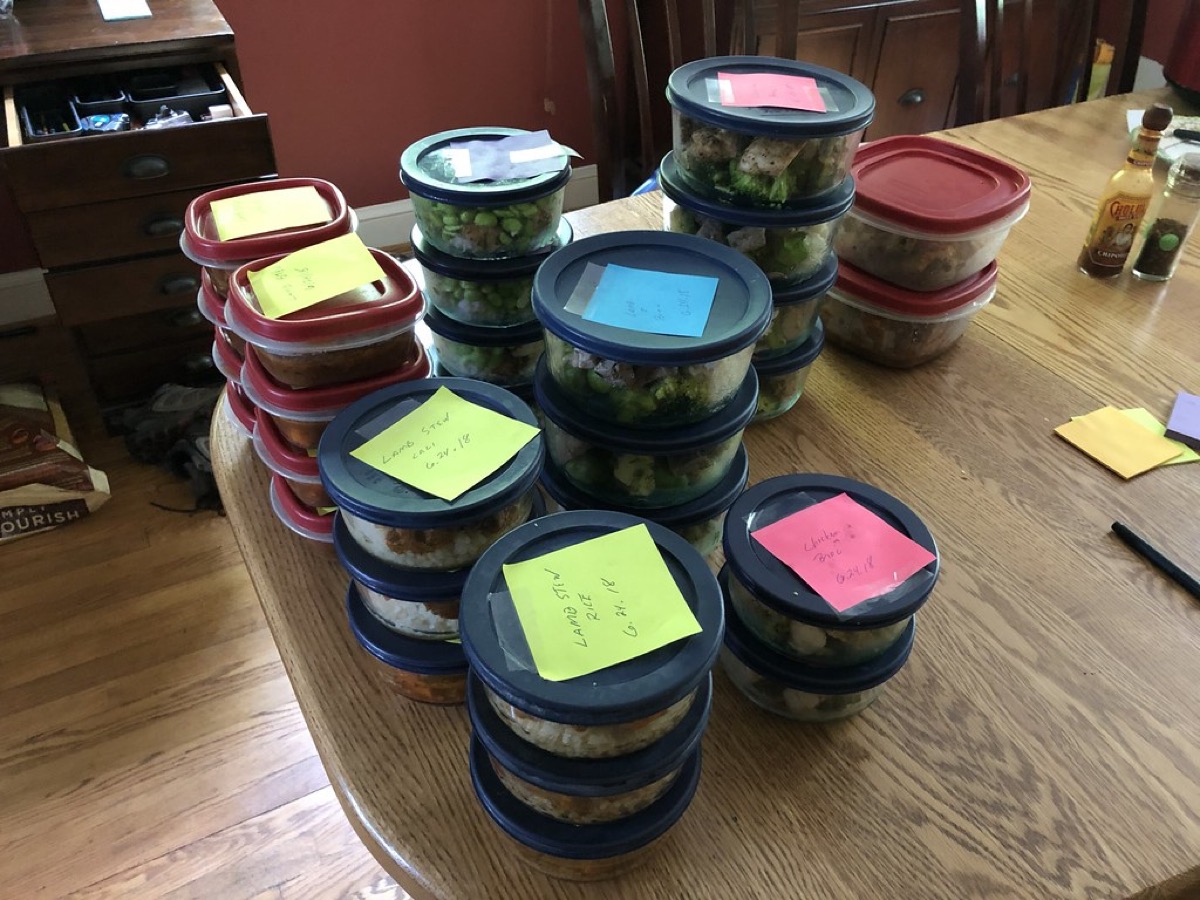
A chart on the wall changes nothing if the containers in the fridge are anonymous. Day dots turn every item into something any team member can read in seconds. A complete label carries five pieces of information, and the coloured dot does the heavy lifting: a glance tells you what day the food belongs to without reading a word.
The colour system is the trick. Assign a fixed colour to each weekday, and staff learn to spot an out-of-place colour instantly, no date arithmetic required. Anything unlabelled has no story, and food with no story gets thrown out on sight. That single habit prevents the mystery-container problem that quietly poisons kitchens and inflates waste.
First in, first out is only as good as its enforcement, and the reliable enforcer is shelf position, not memory. New stock and fresh prep go behind or under what is already there, so the front of every shelf is always the oldest and staff naturally reach for it first. Thawing has its own non-negotiables: in the fridge, never on the bench, and once thawed the clock resumes and raw food is never refrozen. Tie the whole system to your inventory and food-waste process so nothing is written off silently.
When-in-doubt-throw-it-out only works if management backs it. Staff must never fear logging waste, because a hidden risk is worse than a recorded loss. Make waste logging blameless and routine, and the numbers become useful: they show you where over-prep, slow-moving lines or supplier problems live. Your stocktake process then turns those signals into tighter ordering and less spoilage next week.
Published guidance gives you a safe ceiling, but your kitchen should often sit under it. Some items deserve shorter house limits than the chart allows because they carry more risk or get handled more: raw shellfish, soft and unpasteurised cheeses, cooked rice, custards and cream fillings, and any dish that is portioned, plated and touched repeatedly. Set tighter limits on those, factoring in how steadily your fridge holds temperature and how fast you turn stock.
Then put your limits on the wall as the single source of truth. When the chart on the wall and the day dots in the fridge agree, and both are yours rather than a generic printout, the team has one number to trust. Review those limits whenever you change suppliers, equipment or menu, and fold them into a wider food safety checklist so the whole team works from the same page.
How long does cooked food last in a commercial fridge?
Most cooked dishes held at or below 5°C keep for 3–4 days under standard food-safety guidance. Cooked meats, casseroles, soups, stocks and sauces sit in that window; cooked rice and pasta are tighter at 2–3 days because of bacillus cereus. Label everything with a made date and use-by, store the fridge at 5°C or colder, and cool hot food fast before it goes in. When a dish is unlabelled or you are unsure how old it is, throw it out rather than guess.
Does freezing food make it safe again?
No. Freezing at −18°C pauses bacterial growth, it does not reverse it. Food frozen on day three of its fridge life comes back as day-three food, so its remaining safe life is short once thawed. Freezer times like 3–4 months for minced meat are quality windows, not safety cliffs: the food stays safe indefinitely at −18°C but texture, colour and flavour degrade. Always freeze while food is still well within its fridge life, label it with the freeze date, and thaw in the fridge.
What information goes on a food day-dot label?
A complete label carries five things: the product name, the date it was made or opened, the use-by date, the initials of whoever made it, and the day-dot colour for that day of the week. That colour system lets any staff member read the age of a container at a glance from across the kitchen. The date and initials create accountability and make first-in-first-out rotation enforceable. Unlabelled food has no story, and food with no story gets thrown out, which is waste you paid for.
How long can you keep raw chicken in the fridge?
Raw poultry keeps 1–2 days at or below 5°C under standard guidance, and in a busy commercial kitchen the conservative end is the number to work to. Raw minced meat and raw fish or seafood share that 1–2 day limit because their large surface area spoils fast. Whole cuts of meat last a little longer at 2–3 days. Store raw proteins on the bottom shelf so nothing drips onto ready-to-eat food, keep them well within date, and if a delivery arrives near its own use-by, use it first or freeze it.
What is the FIFO rule in a kitchen and how do you enforce it?
FIFO means first in, first out: the oldest stock gets used before newer stock so nothing ages out at the back of the shelf. You enforce it with shelf position, not memory. New deliveries and fresh prep go behind or under what is already there, so the front is always the oldest and staff naturally reach for it first. Pair that with clear day-dot labels and a weekly deep check for anything that slipped to the back. Done properly, FIFO turns your fridge into a self-sorting queue and cuts the waste that quietly erodes your margin.
Should I follow the shelf-life chart or set my own house limits?
Set your own house limits and put them on the wall as the single source of truth. Published guidance gives you a safe ceiling, but your kitchen should often sit under it: high-risk items like raw shellfish, soft cheeses, cooked rice, and anything handled a lot deserve shorter limits than the maximum allows. Your limits factor in how well your fridge holds temperature, how fast you turn stock, and how much handling each item gets. Write them down, train the team to them, and review them if you change suppliers, equipment, or menu.
Storefront, orders, kitchen, CRM and marketing in one place. Start free in a couple of minutes, no card needed. Pop in your email and we'll take you straight to setup.
Quoting a catering job on gut feel is how you end up working a Saturday for nothing. Pricing catering, line by line, with two costed examples.
Nobody enjoys counting the walk-in on a Sunday night. This stocktake procedure is quick enough to keep up, and turns food cost from a guess into a fact.
Two hours or four hours? Every food safety temperature your kitchen needs, in printable tables aligned to MPI guidance, with the reasoning behind each one.
Storefront, POS, kitchen, CRM, marketing. One login, one bill. NZ$1/month for the first 3 months.
Start free trial