How to make a QR code menu (free, 2026)
Reprinting menus for one price change gets old fast. Build a QR code menu free in about ten minutes, and see where a static code stops and QR ordering begins.

What ghost kitchens cost, the three models, unit economics and a launch path

Short answer: a ghost kitchen (also called a dark kitchen) is a food business that cooks only for delivery and pickup, with no dining room. Because you are not paying for a storefront, tables or front-of-house staff, one can open for roughly US$20,000–50,000 in a shared facility, or US$75,000–200,000 in its own unit, against US$275,000 to $1M+ for a dine-in restaurant. The market is worth about US$74 billion and growing around 13% a year. The catch: if every order arrives through a delivery app taking 15–30%, the cost advantage disappears. The winners run lean kitchens and own their ordering channel.
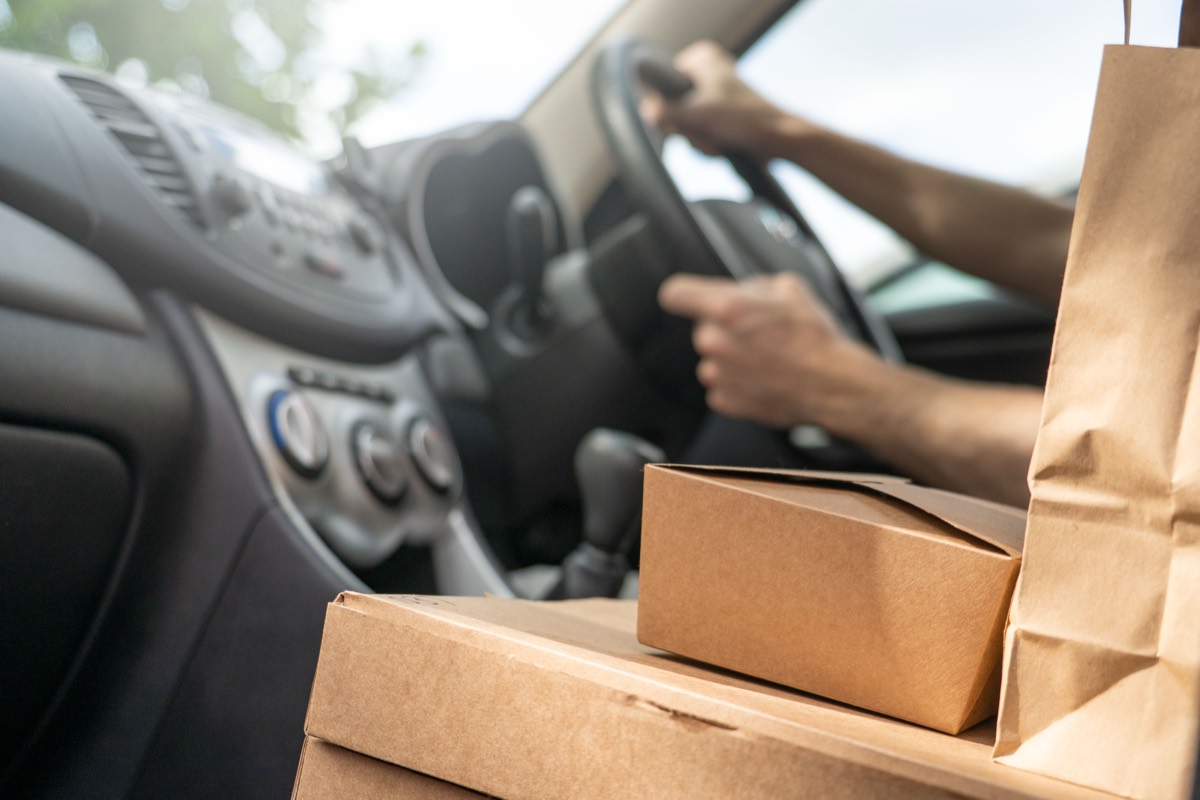
A restaurant is really two businesses: a kitchen that makes food, and a hospitality venue that hosts people. The venue half is where most of the cost lives, prime rent, fit-out, servers, cleaning, breakage. A ghost kitchen deletes that half. You cook in a cheap industrial space, list your brand where hungry people scroll, and meet your customer at their door instead of your own. Done well, that trades a 3–9% restaurant margin for something closer to 10–30%. Done badly, it trades a dining room you control for an app marketplace you rent.
| Term | What it means | Whose kitchen |
|---|---|---|
| Ghost / dark kitchen | Delivery-only food business, no dine-in | Yours (leased unit) |
| Cloud / shared kitchen | Facility renting stations to several delivery brands | A landlord’s, by the station |
| Virtual brand | Delivery-only menu run from an existing restaurant | Your existing restaurant’s |
| Takeaway-first shop | Pickup counter + delivery, tiny or no seating | Yours, with a small shopfront |
The terms get used loosely, but the money logic is identical across all four: minimise space and service cost, maximise kitchen throughput, and get orders in as cheaply as possible.
| Cost line | Shared kitchen station | Own ghost unit | Dine-in restaurant |
|---|---|---|---|
| Get-in cost | ~$20k–50k | ~$75k–200k | ~$275k–1M+ |
| Rent profile | One membership/station fee | Industrial-space rent | Prime retail rent |
| Staff | Cooks only | Cooks + a packer | Cooks + full front of house |
| Typical margin when run well | ~10–30% (≈15% typical) | ~10–30% | ~3–9% net |
| Revenue ceiling | Delivery radius only | Delivery radius only | Dine-in + delivery + walk-ins |
Note the last row. A ghost kitchen caps its own revenue at what a delivery radius can produce. That is fine if the maths work per order, which brings us to the part most guides skip.
Take an $18 order, cooked at a 30% food cost, and follow the money down two different paths:
| Line | Via delivery app (25% commission) | Via your own ordering page |
|---|---|---|
| Order value | $18.00 | $18.00 |
| Platform commission | −$4.50 | $0 |
| Payment + platform fees | included above | −$0.45–0.75 (from 2.5%) |
| Food cost (30%) | −$5.40 | −$5.40 |
| Packaging | −$0.70 | −$0.70 |
| Left for labour, rent and profit | $7.40 | $11.15–11.45 |
Same food, same kitchen, roughly four dollars more per order when it comes in direct. Across 700 orders a month that is around $2,800, which for many small ghost kitchens is the entire profit line. This is why the sharpest operators treat the apps as a discovery channel, get found there, then move regulars to their own channel, exactly the playbook in how to take orders without the app fees.
Lowest risk, fastest start. You get a fitted station, shared cold storage, and often a pickup shelf for couriers. Ideal for testing a concept before committing to a lease. The trade: monthly fees are real, and you are building a business inside someone else’s building.
More upfront cost, full control. Choose cheap industrial or back-street space near your demand, not on the high street, the whole point is that customers never visit. Spend the savings on kitchen throughput: extraction, fridge space, and a layout built around a packing bench.
If you already run a restaurant, your quiet hours are free capacity. A tight delivery-only menu under a second name, five items, shared ingredients, built for the box, can add revenue with almost no new cost. Run it as its own P&L so you can see whether the brand stands on its own.
1. Pick a cuisine that travels. Fried chicken, pizza, curries, rice bowls, smash burgers, food that is still good 25 minutes after it leaves the pass. Soggy-fragile concepts die in the box.
2. Cost the menu before you cook anything. Every item priced from its plate cost, tested against what the delivery market in your area will pay.
3. Choose your kitchen model. Station first if you are unproven; own unit once demand is real; virtual brand if you already have a kitchen.
4. Sort registration, food-safety plan and insurance, the same compliance as any food business, minus the dining-room requirements.
5. Engineer the packaging. It is your only physical touchpoint, so treat packaging as the dining room: heat retention, no leaks, brand on the box.
6. Stand up your own ordering channel on day one, a website with your menu, direct ordering and payments, plus a Google Business Profile so searches find you and not just the apps.
7. List on one or two delivery apps for discovery, then convert. A flyer in every bag with a first-order code for your direct site turns rented customers into owned ones.
What is the difference between a ghost kitchen, a dark kitchen and a virtual brand?
Ghost kitchen and dark kitchen mean the same thing: a delivery-only kitchen with no dine-in space. A cloud kitchen usually refers to a shared facility where several delivery brands rent stations. A virtual brand is a delivery-only menu run out of an existing restaurant kitchen, for example a wing brand operating out of a pizzeria at night. The economics are similar; what changes is whose kitchen you are standing in.
How much does it cost to start a ghost kitchen?
Renting a station in a shared kitchen can get you trading for roughly US$20,000–50,000 all-in. Fitting out your own small delivery-only unit typically runs US$75,000–200,000. Both are a fraction of the US$275,000–1,000,000 a full dine-in restaurant costs, which is exactly the appeal: you are paying for a kitchen and nothing else.
Are ghost kitchens profitable?
They can be. Well-run ghost kitchens report margins of roughly 10–30%, with about 15% typical, against the 3–9% net margin of a standard restaurant. But the model lives and dies on delivery economics: if every order arrives through a 15–30% commission app, the margin advantage evaporates. The profitable ones build a direct ordering channel and use the apps for discovery only.
Do ghost kitchens work in small towns?
They work best where delivery demand is dense: cities, student areas, office districts. In a small town the same idea often works better as a takeaway-first kitchen with your own ordering page and pickup, because the delivery-app pool is thin. The core lesson transfers anywhere: sell food without paying for a dining room.
Can I run a ghost kitchen from my existing restaurant?
Yes, and it is the lowest-risk way in. A virtual brand reuses your kitchen, staff and ingredients during quiet hours under a new delivery-only name. If your kitchen is idle from 2–5pm, a delivery brand with a tight five-item menu can produce revenue from capacity you already pay for. Just track it as its own P&L so you know whether it actually makes money.
Storefront, orders, kitchen, CRM and marketing in one place. Start free in a couple of minutes, no card needed. Pop in your email and we'll take you straight to setup.
Reprinting menus for one price change gets old fast. Build a QR code menu free in about ten minutes, and see where a static code stops and QR ordering begins.
Somewhere along the way you ended up with nine logins that do not talk. This maps the restaurant tech stack layer by layer, and what a dozen point tools really cost.
Average order value is total revenue divided by number of orders. Here is how to calculate it, why it beats chasing traffic for margin, and how to raise it.
Storefront, POS, kitchen, CRM, marketing. One login, one bill. NZ$1/month for the first 3 months.
Start free trial