How to make a QR code menu (free, 2026)
Reprinting menus for one price change gets old fast. Build a QR code menu free in about ten minutes, and see where a static code stops and QR ordering begins.

Setup costs, permits, honest volume maths and site strategy for an NZ coffee cart

Short answer: a coffee cart is the lowest-capital, lowest-compliance way into hospitality. Where a cafe fit-out runs well into six figures, a cart is built around a short list of gear, needs no lease, and in New Zealand sits in the lightest food-safety tier: a cart selling hot drinks and shelf-stable food registers under National Programme level 1, the lowest-risk category, with no written food safety plan required. The catch is volume. A cart lives or dies on foot traffic, so the decision that matters most is where you park. Get the site right and the maths is kind; get it wrong and no amount of good coffee will save the day.
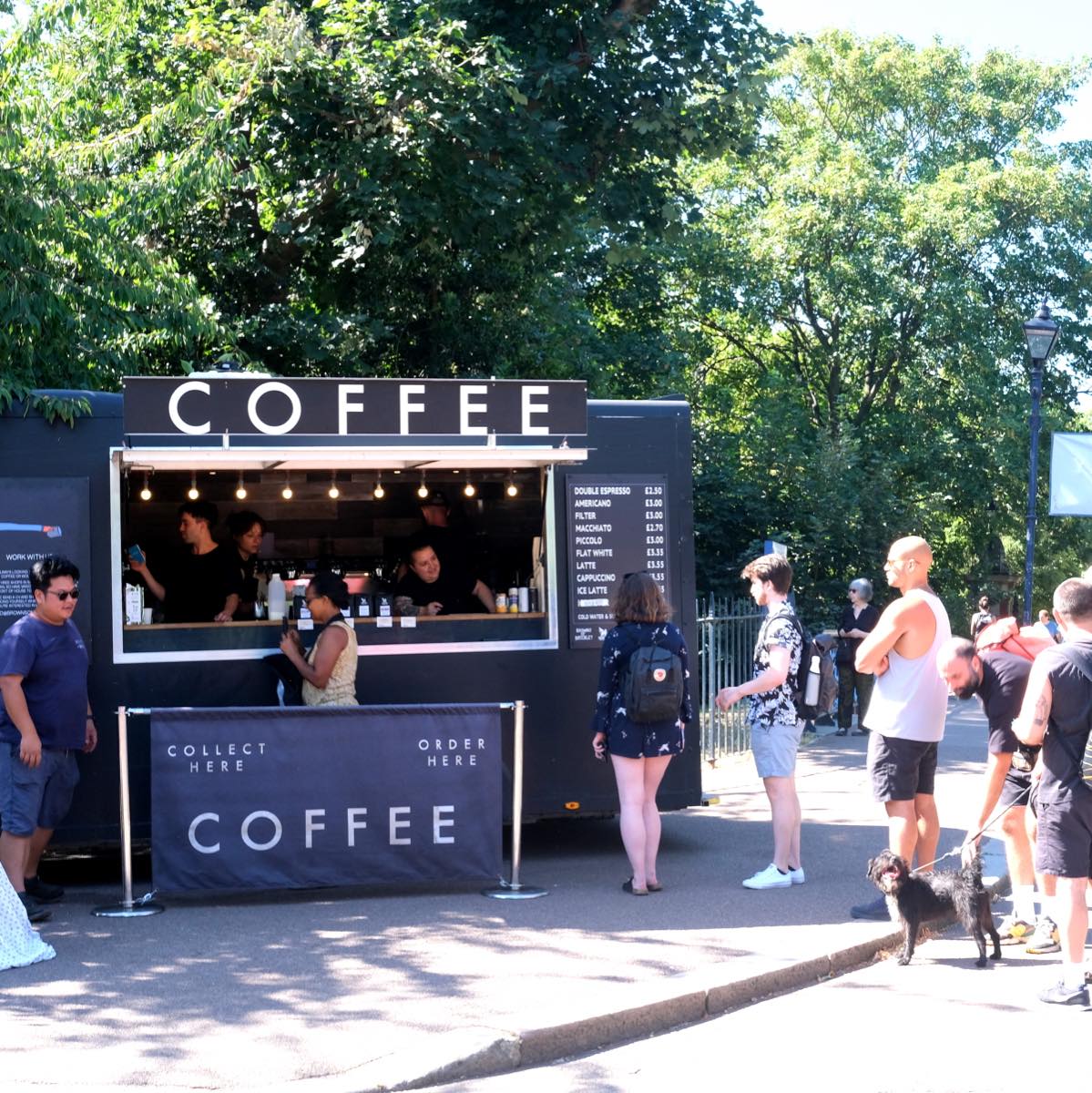
You skip almost everything that makes a cafe expensive and slow: no bare-shell build, no commercial-kitchen extraction, no bond, no years-long lease. Our breakdown of the cost to open a cafe in NZ shows a fit-out alone can absorb well over NZ$100,000 before you buy a single machine. A cart replaces that with a handful of items you can often buy used, so you can be trading in weeks.
Compliance is lighter too. A cart serving espresso and packaged, shelf-stable food falls under National Programme level 1, the lowest-risk category in the Food Act framework, which does not require the written plan a sit-down cafe must maintain. You still register with your council and stay open to inspection, but the paperwork is a fraction of a full Food Control Plan. Our guide to food business licences and permits covers where your menu lands, since higher-risk food can bump you up a tier.
This is the whole business in one table. Prices vary far too much to quote honestly, so the columns focus on what to look for and where new versus used makes sense. Spend on the machine and grinder, since reliability there is revenue, and save on everything the customer never sees.
PLACEHOLDER_REMOVE
| Item | What to look for | Buy new or used |
|---|---|---|
| Cart or trailer | Compliant surfaces, hand-wash station, weatherproofing, and a tow rating your vehicle can handle | Used is fine; a solid second-hand build saves a lot |
| Espresso machine | A dual boiler for volume, so steam and extraction do not fight each other in the rush | New for reliability and warranty, or a serviced ex-cafe unit |
| Grinder | On-demand grinding, consistent dose, easy to dial in between busy stretches | New; grind quality shows up in every cup |
| Water system | Fresh-water and separate waste tanks sized for a full day so you are not refilling mid-rush | Used tanks are fine; check for clean, food-grade fittings |
| Power | Site power where you can get it, a generator where you cannot, or a battery for quiet spots | Depends on sites; test your real draw before buying |
| Fridge | Under-counter unit that holds milk safely through the day and copes with heat | Used is fine if the seals and compressor are sound |
| EFTPOS and POS | Fast tap payments, offline fallback, and a POS that runs on a tablet | New; card acceptance and speed matter at the counter |
Here is the illustration every would-be cart owner should run before spending a dollar. Say you sell at NZ$5.50 a cup. Your cost per cup, once you count beans, milk, cup and lid, sits around NZ$1.40 to NZ$1.80. Use NZ$1.60 as a middle figure, and each cup makes roughly NZ$3.90 of contribution before your pitch fee, wages, and the cart itself. Contribution is not profit, it is what is left to cover everything else, but it makes the volume point vividly.
| Day | Cups sold | Revenue at NZ$5.50 | Contribution at NZ$3.90/cup |
|---|---|---|---|
| Quiet day | 80 | NZ$440 | NZ$312 |
| Strong commuter morning | 150 | NZ$825 | NZ$585 |
Those figures are illustrative, not a promise, and your real cost per cup will move with milk prices and how much you comp or waste. But notice what changes between the two rows: not the coffee, not the price, just the number of people walking past. That is the whole lesson of a coffee cart. Location decides everything, which is why site strategy matters more than the gear you buy.
Three site types reliably produce volume, and most strong carts run a blend of them. Commuter routes on weekday mornings give a dependable rush of people who want the same thing at the same time. Markets and events on weekends give volume and discovery, though you pay for it. Business parks and construction sites, arranged directly with whoever runs them, can be quietly excellent: a captive crowd, no council permit, and repeat trade five days a week.
The permit picture follows the site. Public spots need a council street-trading or mobile-trading permit, and rules differ by council, so ask before you park. Markets charge a pitch fee, usually per day. Private land runs on an agreement with the owner, which sidesteps the council permit but depends on goodwill. Whatever the spot, one discipline protects you above all: test a site for a month before committing to a long permit or an exclusive deal. A location that looked perfect on a sunny Tuesday can be a ghost town in practice.
Weather matters, but less than for most cart food. A cold, grey morning can actually lift demand for a hot flat white, though foot traffic still thins when it turns genuinely miserable, and weekend markets quieten over the coldest months. Plan like a seasonal business, scaled down: budget on the quiet months, treat the busy ones as upside, and hold a cash buffer. A sheltered, high-traffic weekday pitch is the best hedge, because it keeps trading when the open-air sites empty out.
At cart scale, regulars are not a nice-to-have, they are the business. The same forty faces on their way to work will carry your week, so learn their names and their usuals, and start the flat white the moment you see them coming. A simple loyalty stamp, buy nine get the tenth free, turns a casual buyer into a daily habit. For a commuter cart, pre-orders are the real unlock: let people order the 8am rush ahead so it is made and waiting, which lifts both throughput and average spend. Our rundown of restaurant loyalty programs shows how a stamp card scales into something you can measure.
A cart that works is a proving ground, and once you know your true daily volume and your regulars, three paths open up. A second cart covers more sites and spreads the fixed cost of your brand and gear. A permanent kiosk, in a mall, transport hub or busy foyer, trades flexibility for steadier footfall and longer hours. Or you graduate to a full cafe, this time with real numbers instead of guesses. If the itch is a truck rather than a shopfront, our guide to starting a food truck business walks the same ground with a bigger kitchen. Move up only when the cart has told you, in cups and dollars, that the demand is really there.
How much does it cost to start a coffee cart in NZ?
Far less than a cafe, which is the whole point. A cafe fit-out runs well into six figures, while a cart is built around a handful of items: the cart or trailer itself, an espresso machine, a grinder, water tanks, power, a fridge, and EFTPOS. Get real quotes rather than trusting a single figure, and buy the workhorses used where you can. The espresso machine and grinder are where new gear and reliability earn their keep, because a dead machine at 8am is lost trade you never get back.
What licence do I need for a coffee cart in New Zealand?
A cart selling hot drinks and shelf-stable food sits in the lightest food-safety tier: National Programme level 1, the lowest-risk category, with no written food safety plan required, per the Food Act framework. You still register with your council and stay subject to checks, but the paperwork is a fraction of a full Food Control Plan. Separately, you need permission to trade wherever you park: a council street-trading permit for public spots, a pitch fee at markets, or a private-land agreement. Confirm the current tier for your exact menu first.
How many cups a day does a coffee cart need to sell?
It depends entirely on your location, which is exactly why site selection matters more than anything else. As a rough illustration, at NZ$5.50 a cup with a cost per cup near NZ$1.60, a quiet 80-cup day makes about NZ$312 in contribution before you have paid yourself, your pitch, or your other costs. A strong 150-cup commuter morning makes about NZ$585. The gap between those two days is not the coffee, it is the foot traffic, so test a site hard before you commit to it.
Where is the best place to put a coffee cart?
Three site types reliably work: commuter routes on weekday mornings, markets and events on weekends, and business parks or construction sites by arrangement. Commuter spots give you a predictable rush; markets give you volume and discovery but cost a pitch fee; private sites by arrangement can be gold because there is no council permit and a captive crowd. Most successful carts run a mix. The one rule that saves money: test any site for a month before you sign up to a long commitment or an expensive permit.
Is a coffee cart profitable in winter?
It can be, but plan for the swing rather than be surprised by it. Coffee is more weather-resilient than ice cream, since a cold, wet morning can lift hot-drink demand, yet outdoor foot traffic still drops when it is miserable, and market trade thins over the coldest months. Build your budget on the quieter season, treat the busy months as upside, and keep a cash buffer so a run of bad weather does not sink you. A sheltered, high-traffic weekday site is the best hedge there is.
Can a coffee cart grow into something bigger?
Often, and it is one of the smartest ways to test hospitality before betting the house. A proven cart can add a second cart to cover more sites, graduate to a permanent kiosk in a mall or transport hub, or become the springboard for a full cafe once you know your numbers and your regulars. The advantage is that you learn the trade, the coffee, and your true daily volume on a small budget first, so any bigger move is made with real data rather than hope.
Storefront, orders, kitchen, CRM and marketing in one place. Start free in a couple of minutes, no card needed. Pop in your email and we'll take you straight to setup.
Reprinting menus for one price change gets old fast. Build a QR code menu free in about ten minutes, and see where a static code stops and QR ordering begins.
Somewhere along the way you ended up with nine logins that do not talk. This maps the restaurant tech stack layer by layer, and what a dozen point tools really cost.
Average order value is total revenue divided by number of orders. Here is how to calculate it, why it beats chasing traffic for margin, and how to raise it.
Storefront, POS, kitchen, CRM, marketing. One login, one bill. NZ$1/month for the first 3 months.
Start free trial