How to make a QR code menu (free, 2026)
Reprinting menus for one price change gets old fast. Build a QR code menu free in about ten minutes, and see where a static code stops and QR ordering begins.

Why hotel food and beverage is its own discipline, and how to run it profitably

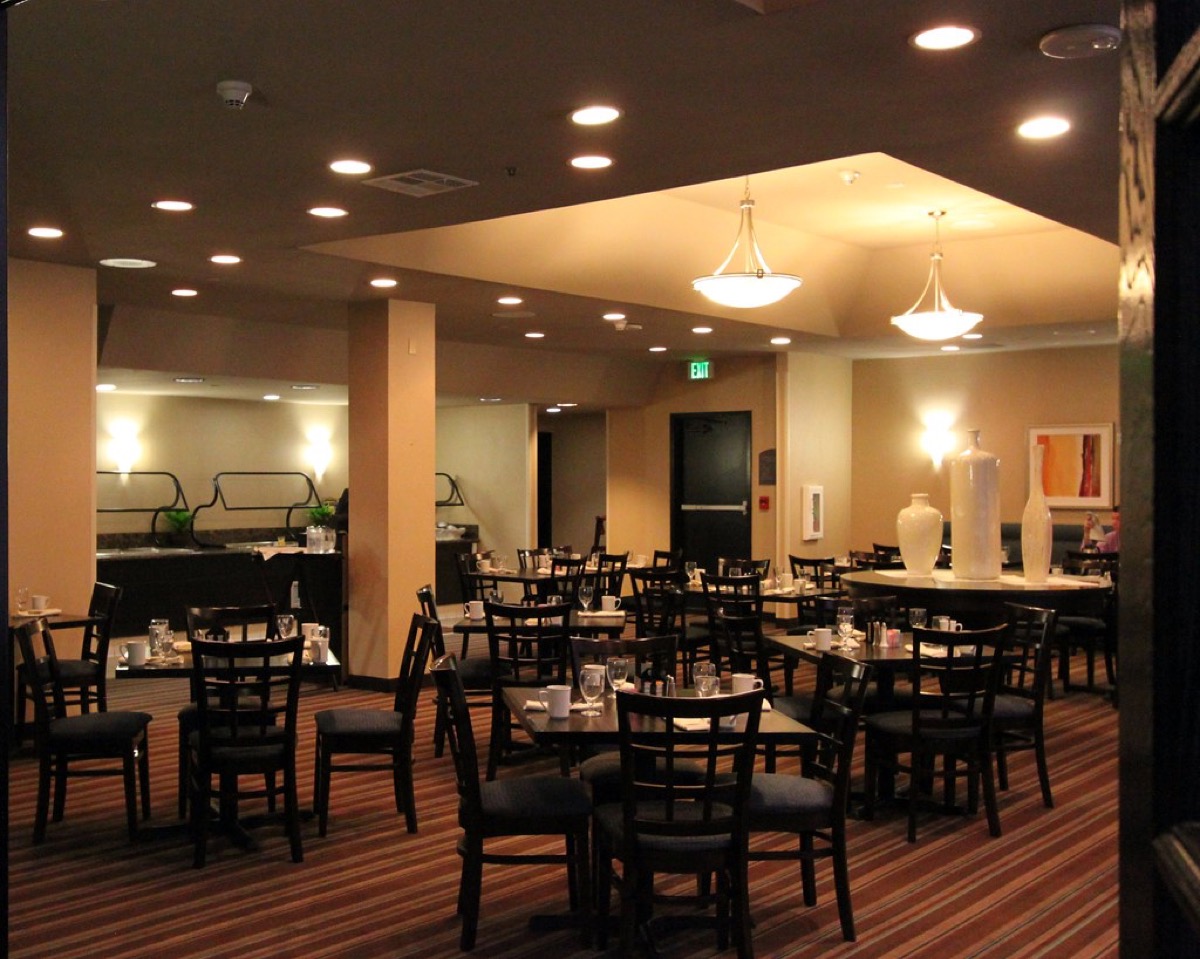
Short answer: hotel restaurant management is running all of a hotel’s food and beverage, the restaurant, bar, room service, breakfast and banquets, as one coordinated operation. It is harder than a standalone restaurant because there are several outlets sharing staff and stock, service runs around the clock, and everything has to post to guest rooms through the hotel’s property-management system (PMS). Get the systems and the numbers right per outlet and it becomes one of a hotel’s best profit centres.
| Outlet | Key challenge | What to watch |
|---|---|---|
| Main restaurant | Covers + turning tables at peak | RevPASH, average spend |
| Bar | Margin + stock control on spirits | Pour cost, wastage |
| Room service | Speed + accuracy to the room | Delivery time, order value |
| Breakfast / buffet | Waste vs running out | Cost per cover, food waste |
| Banquets & events | Forecasting for big numbers | Contribution margin, staffing |
The technical heart of hotel F&B is a POS that integrates with your PMS so charges post to the right room, plus one place to see stock and sales across every outlet. Without that, you get double entry, room-charge errors and a fog over which outlet is actually making money. Prioritise clean integration and cross-outlet reporting over any single flashy feature.
Track these per outlet, not just for F&B as a whole:
| Metric | How to read it | Rough guide |
|---|---|---|
| F&B cost % | Food and drink cost as a share of F&B sales | ~28–35% food, lower on beverage |
| Labour cost % | Wages incl. on-costs over sales | ~25–35%, service-heavy at the top |
| Capture rate | In-house guests who eat with you | Breakfast high; dinner varies widely |
| RevPASH | Revenue per available seat hour | Track the trend against your own baseline |
Capture rate and RevPASH are where the money hides, so make them concrete. Picture a 120-room hotel running around 70% occupancy, roughly 168 guests in-house on an average night. If the restaurant captures 20% of them for dinner at a $45 average spend, that is about $1,512 a night. Lift capture to 30%, the sort of gain a captive audience and a nudge (a QR menu in the room, a “dine with us tonight” card at check-in) can produce, and it becomes about $2,268: over $750 more a night, roughly $270,000 a year, from guests already sleeping upstairs.
RevPASH catches the other half. A 60-seat restaurant open four hours has 240 seat-hours; $3,600 of revenue is a RevPASH of $15. Watch it by daypart and the pattern shows you whether to chase covers (a slow, empty service) or spend per cover (a full room ordering lightly), because those two problems need opposite fixes. Neither number means much as a monthly F&B average; both are sharp when you read them per outlet, per daypart, against your own trend.
The efficiency of hotel F&B, and its biggest costing headache, is that outlets share resources. A single kitchen may plate room service, breakfast and the restaurant; bar staff may cover the lounge and events; stock moves between all of them. That sharing is what makes the operation affordable, but it is also why a per-outlet number can be a fiction unless you allocate honestly. Split labour by where hours are actually worked, not by an even carve-up, and transfer stock between outlets on the system so each one carries its true cost. The same forecast-to-demand rostering that runs a standalone venue (the method is in staff scheduling) applies here, just across several service peaks at once: a breakfast wave, a lunch lull, a dinner build, and the odd banquet that dwarfs them all.
What is hotel restaurant management?
Hotel restaurant management is running the food and beverage (F&B) side of a hotel: the restaurant, bar, room service, breakfast/buffet, and banquets or events. It differs from a standalone restaurant because there are multiple outlets to coordinate, it must integrate with the hotel’s property-management system (PMS) so charges post to rooms, and guest expectations and costing are more complex.
What is the difference between a hotel restaurant and a standalone one?
A standalone restaurant runs one service in one room. A hotel restaurant is one of several F&B outlets that share staff, stock and systems, serve a captive but demanding guest base around the clock, and must post charges to guest rooms through the PMS. The operational complexity, and the coordination between outlets, is the real difference.
What POS system is best for a hotel restaurant?
The best hotel F&B POS integrates cleanly with your PMS so a guest can charge a meal to their room, handles multiple outlets and menus, and reports across all of them together. Match it to how many outlets you run and whether it must talk to an existing PMS; the integration matters more than any single feature.
What are the key metrics in hotel F&B?
Watch food and beverage cost percentage (per outlet), labour cost, the capture rate (the share of guests who eat with you rather than out), average spend per cover, and RevPASH (revenue per available seat hour). Track them per outlet, not just for F&B as a whole, so you can see which outlet is carrying and which is leaking.
What is a good capture rate for a hotel restaurant?
Capture rate is the share of in-house guests who eat or drink with you rather than going out, and it swings hugely by outlet and location. Breakfast often captures a large majority of guests, especially when it is included in the rate, while dinner in a city hotel surrounded by restaurants may capture only a small fraction. The useful move is not chasing an industry average but measuring your own rate per outlet and per daypart, then attacking the biggest gap: a few points of extra dinner capture from a captive audience is close to pure profit.
How is hotel room service made profitable?
Room service is notoriously thin because delivery labour is high and orders are often small, so the levers are order value and efficiency: a tight, high-margin menu that travels well, a clear delivery-charge or tray-charge policy, and QR ordering from the room so a guest can order without a phone call and staff are not tied up taking orders. Push average order value and cut the minutes per delivery, rather than trying to serve a full restaurant menu to every floor.
Storefront, orders, kitchen, CRM and marketing in one place. Start free in a couple of minutes, no card needed. Pop in your email and we'll take you straight to setup.
Reprinting menus for one price change gets old fast. Build a QR code menu free in about ten minutes, and see where a static code stops and QR ordering begins.
Somewhere along the way you ended up with nine logins that do not talk. This maps the restaurant tech stack layer by layer, and what a dozen point tools really cost.
Average order value is total revenue divided by number of orders. Here is how to calculate it, why it beats chasing traffic for margin, and how to raise it.
Storefront, POS, kitchen, CRM, marketing. One login, one bill. NZ$1/month for the first 3 months.
Start free trial