Restaurant menu design: the layout tricks that lift spend
Menu design is not decoration, it is where guests decide what to spend. Scanning patterns, price placement, typography, and a one-page redesign checklist.

The research, four description formulas, rewrites you can copy, and cliches to cut

Short answer: the words on your menu are a sales tool with measured results. In Cornell’s well-known field study, dishes with descriptive labels sold 27% more than the identical dishes under plain names, and diners rated them as higher quality and better value after eating. The craft is simple enough to learn in an afternoon: one or two lines per dish, built from what is specifically true (method, texture, provenance, taste), with the empty adjectives banned. This guide gives you the formulas, real before-and-after rewrites, and the differences that matter when the menu lives on your ordering page instead of the table.
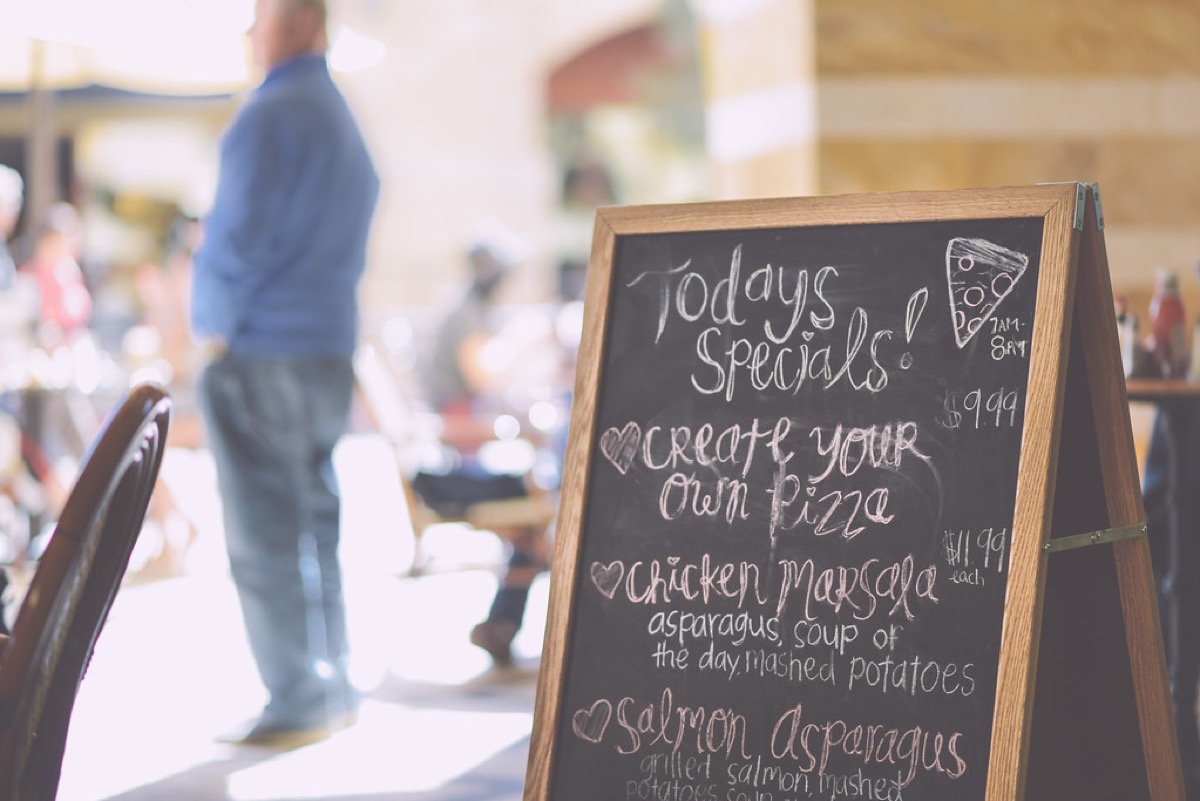
A menu is a moment of imagination: the customer tastes the dish in their head before choosing it. Plain names give the imagination nothing (“Seafood filet”); descriptive ones give it flavour, temperature and a story (“Succulent Italian seafood filet”), and in the Cornell study that difference moved 27% more orders and lifted post-meal quality ratings. The mechanism matters for how you write: descriptions work by making one dish vivid, not by shouting that everything is amazing. Two honest, sensory lines outsell a paragraph of superlatives every time.
| Formula | What it does | Example fragment |
|---|---|---|
| Method + texture | Puts the kitchen’s work on the page | “slow-braised eight hours, falling off the bone” |
| Provenance | Borrows trust from a place or person | “Cloudy Bay clams”, “our nonna’s Sunday recipe” |
| Sensory contrast | Makes the mouth pay attention | “charred and smoky outside, pink and juicy inside” |
| The one detail | A single specific that proves care | “finished with burnt-honey butter” |
Build each description from one or two formulas, never all four. The skeleton that almost always works: what it is, how it is cooked or what makes it yours, one sensory or provenance detail. Ten to twenty-five words.
| Before | After |
|---|---|
| Chicken burger | Buttermilk-fried chicken burger, crunchy slaw, house pickles and hot-honey mayo on a toasted brioche bun |
| Margherita pizza | Wood-fired margherita: San Marzano tomatoes, fresh fior di latte and basil on a 48-hour dough |
| Pumpkin soup | Roast pumpkin soup with brown butter, toasted seeds and grilled sourdough |
| Chocolate cake | Warm chocolate fudge cake, molten centre, vanilla-bean cream |
Notice what changed: cooking method, one provenance or process detail (48-hour dough), textures the reader can feel, and zero “delicious”. Notice also what did not change: the kitchen. This is the rare upgrade with no food cost attached, which is why it belongs beside menu engineering: engineering decides which dishes deserve the spotlight, descriptions are the spotlight.
On your ordering page nobody can ask “how spicy is that?”, so the copy carries the conversation: include heat level, a size cue for shareable items, and the allergens people actually ask about. Keep the same voice as the printed menu, add the practical layer, and pair every hero dish with a real photo, described dishes with photos are the online equivalent of a waiter’s recommendation, and digital tickets already run larger than counter orders (see average order value). One writing session covers both menus when they live in one system.
Pull your ten best sellers and your five best-margin dishes (they overlap). For each, ask the kitchen two questions: what do we actually do to this dish, and what is the one detail a regular would brag about? Draft with the formulas, cut every banned word, read each line aloud once (clunky out loud is clunky on the page), and ship. Then watch the numbers for a month, item sales before and after is a clean experiment your weekly KPIs will catch, and rewrite the next tier. A full menu of honest, vivid copy is a one-evening project that keeps paying every service.
Do menu descriptions really increase sales?
Yes, and it is one of the best-replicated findings in menu research: Cornell’s Food and Brand Lab found dishes with descriptive labels sold 27% more than identical dishes with plain names, and diners rated the described dishes as higher quality and better value afterwards. Words are the cheapest upgrade on your menu, the food does not change, the sales do.
How long should a menu description be?
One to two lines, roughly 10–25 words. Long enough to carry one sensory detail and one point of difference, short enough to scan. Your hero dishes and high-margin items earn the fuller treatment; simple sides can survive on a name. A menu where every item has a paragraph is as unreadable as one with no descriptions at all.
What words make food sound good on a menu?
Specific, sensory and true ones. Cooking method (wood-fired, slow-braised, charred), texture (crisp, silky, sticky), provenance (the supplier, the region, the family recipe), and taste markers (smoky, bright, rich). What fails: empty superlatives (delicious, amazing), adjective pile-ups, and menu clichés like “drizzled” doing heavy lifting for a squeeze bottle. If a word could describe any dish anywhere, it is not earning its place.
Should I write different descriptions for my online ordering menu?
Same voice, slightly more information. Online, the description replaces the server: nobody is there to answer “is it spicy?” or “how big is it?”, so cover heat, size cues and key allergens in the copy. Photos carry more weight online too, and a good description plus a real photo is the closest thing digital ordering has to a recommendation from a waiter.
Can a description be too good?
Yes, and the same Cornell work carries the warning: descriptive labels raise expectations, and the plate has to meet them. Call something “famous” before anyone knows it, or “crispy” when it arrives soft, and the gap becomes disappointment, then a review. Write one notch below your most enthusiastic honest opinion and let the food overdeliver.
Who should write the menu, the chef or a copywriter?
Start with the chef’s knowledge and someone else’s ear. The chef knows what is true and special about each dish (the 14-hour braise, the local butter); a second person turns that into two clean lines a customer can taste while reading. If that second person is you, the formulas in this guide are the whole toolkit. Rewrite the top ten sellers first; that is where the words move money.
Storefront, orders, kitchen, CRM and marketing in one place. Start free in a couple of minutes, no card needed. Pop in your email and we'll take you straight to setup.
Menu design is not decoration, it is where guests decide what to spend. Scanning patterns, price placement, typography, and a one-page redesign checklist.
Marketing when you remember to is not a plan. A restaurant marketing plan in four layers, with what to do weekly, monthly and seasonally.
Photos sell dishes the way a good waiter does. A one-hour food photography system for your phone: window light, three angles, ten frames a dish.
Storefront, POS, kitchen, CRM, marketing. One login, one bill. NZ$1/month for the first 3 months.
Start free trial