How to make a QR code menu (free, 2026)
Reprinting menus for one price change gets old fast. Build a QR code menu free in about ten minutes, and see where a static code stops and QR ordering begins.

Venue hunting, permits, prepaid ticket economics and turning buzz into a following

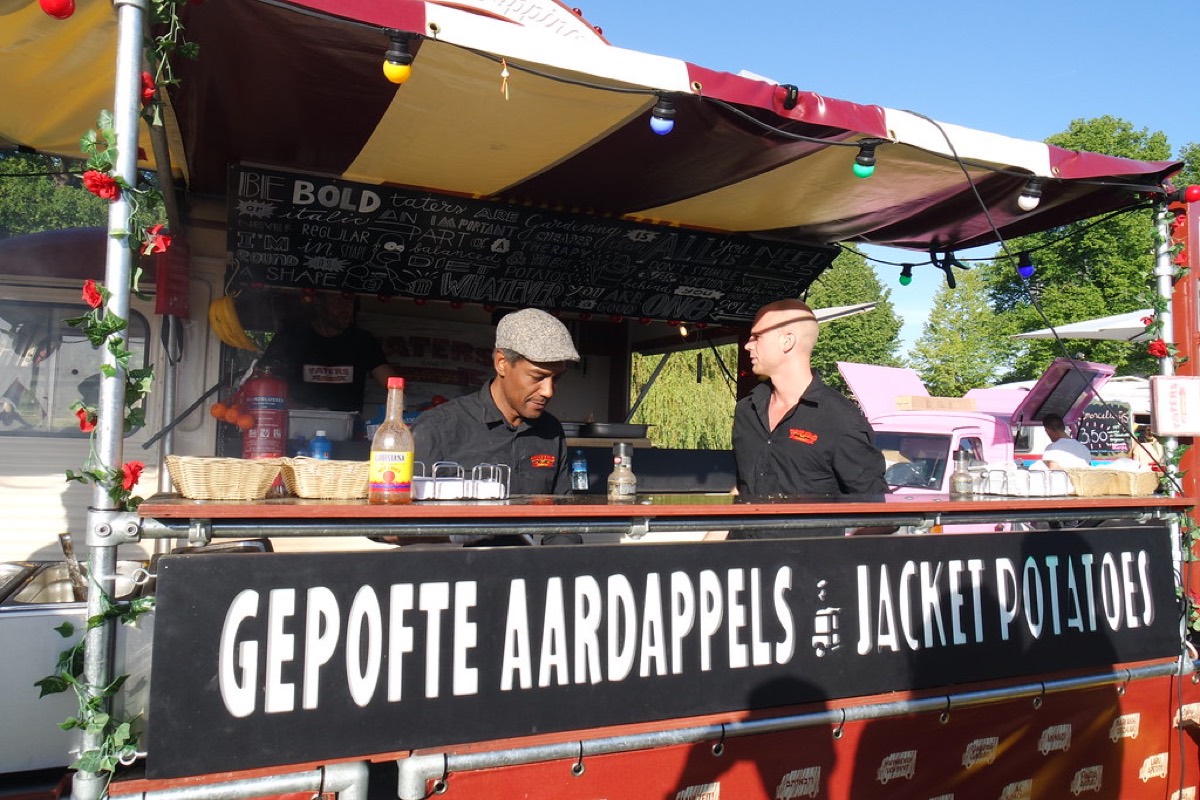
Short answer: a pop-up is the cheapest honest test in food. A lean one, a takeover of a closed restaurant, a supper club, a market residency, runs on US$2,000–5,000; a fuller production with hired venue lands around $20,000–50,000. Permits are real but small (commonly $100–800 per event; temporary liquor extra), and the winning economics are prepaid: sell tickets or pre-orders first, buy exactly what you need, cook for a room that is already sold out. Run it right and the profit is nice but secondary, what you are really buying is proof of concept and an audience list that makes whatever comes next (more dates, wholesale, a permanent site) start warm.
| Format | Typical cost | Best for |
|---|---|---|
| Restaurant takeover (their dark night) | Low: revenue share or flat fee | Full service test with inherited kitchen + licence |
| Supper club (fixed menu, ticketed) | ~$2k–5k | Chefs building a name; highest control |
| Bar / brewery kitchen residency | Low, ongoing | Weeks-long test with built-in thirsty audience |
| Market stall series | Booth fees $20–75/day | Volume practice + discovery (see the markets guide) |
| Hired blank venue | $2k–5k/event venue alone | Brand statements; the expensive way to learn |
The pattern in the table: borrow infrastructure. A restaurant dark on Mondays has a kitchen, a licence, furniture and rent anxiety; your pop-up solves their empty night and they solve your everything else. Blank venues make beautiful photos and thin margins.
Expect: a temporary food establishment permit per event or period ($50–200 in most jurisdictions), current food-handler credentials, the host kitchen’s registration covering preparation, and, if you pour, a temporary liquor licence ($75/day to $1,000+ by region and scale). Hosting inside an already-registered kitchen inherits most of this, which is another vote for takeovers over blank rooms. Call the local authority before your first event; the rules are usually easier than the rumour, and the food safety basics apply at full strength in temporary settings, where inspectors know corners get cut.
The pop-up superpower is inverting the restaurant’s worst risk. A restaurant guesses demand daily and bins the error; a pop-up that sells tickets or pre-orders first has zero demand risk and near-zero waste: 60 tickets at $85 is $5,100 banked before a single ingredient is bought, food is purchased for exactly 60 covers, and the “slow night” cannot happen because the night was sold before it began. Price tickets on the full experience (menu + occasion), take the money at booking, publish a fair no-refund-inside-72-hours policy (you buy food on their commitment, the same logic as no-show deposits), and let a waitlist absorb any drops.
1. Lock the concept to one line and ONE tight menu, a set menu or five items, executed perfectly in a borrowed kitchen, beats ambition every time. 2. Book the venue and date six weeks out; confirm equipment in person (that “full kitchen” may be two induction plates). 3. Open ticket or pre-order sales immediately, your page, your list capture, your payment. 4. Announce in three waves: your list first (sell-outs start there), then socials with the venue cross-posting, then local media/foodies comped honestly for coverage. 5. Prep in a shared kitchen ($25–55/hour) the day before; cook day-of with a written timeline. 6. Work the room, the chef saying hello at tables IS the product at a pop-up. 7. Same night: thank-you message to every attendee with photos and the next date.
Treat every event as list-building with excellent catering. Every ticket buyer’s name, email and phone should land on YOUR list (not a ticket platform’s database), every attendee should leave following your socials, and the 48-hour follow-up (“photos from Saturday + we are doing it again on the 28th”) should be automatic. Three sold-out pop-ups create the assets that change your options: proof for landlords and investors, a menu tested on paying strangers, press and photos, and several hundred people who will show up to whatever you open. That is how pop-ups convert to residencies, wholesale deals and permanent sites that launch busy instead of hopeful.
How much does it cost to run a pop-up restaurant?
A lean pop-up, a market stall, a bar takeover, a supper club in an existing kitchen, can run on US$2,000–5,000. A fuller production with a hired venue commonly lands at $20,000–50,000, with urban venue hire alone often $2,000–5,000 per event. Add permits ($100–800 for the typical bundle, more with temporary liquor) and staffing at 20–30% of expected revenue. The lean end is the smart end: pop-ups exist to learn cheaply.
Do I need a licence for a pop-up restaurant?
Yes. Almost everywhere requires a temporary food establishment permit (commonly $50–200 per event), food-handler credentials, and compliance with the host venue’s kitchen registration; serving alcohol needs a temporary liquor licence ($75 a day to $1,000+ depending on scale and region). The clean shortcut is hosting inside an already-licensed kitchen (a restaurant on its dark night, a shared kitchen), where you inherit most of the compliance.
How do I find a venue for a pop-up?
Think in dark hours: restaurants closed on Mondays, cafés closed at night, bars with no kitchen, breweries that want food, shared kitchens ($25–55/hour) for prep. These hosts have rent to cover and empty rooms; a revenue share or flat fee that fills their dark night is an easy yes. The venue’s existing licence, equipment and even audience come with the deal, which beats hiring a blank space almost every time.
How do pop-ups make money?
Prepaid tickets or pre-orders, not walk-ins. Selling seats or boxes in advance means you buy exactly the right amount of food (waste near zero), the cash arrives before you spend it, and a sold-out event is literally sold out before you cook. Per-event profit is usually modest; the real returns are the audience list you build, the concept you validate, and the wholesale/residency offers that follow a great one.
Are pop-ups a good way to test a restaurant concept?
The best way that exists. For a few thousand dollars you learn what a $300,000 fit-out would otherwise teach you: does anyone order the food, at what price, what sells out, what dies, can you execute service at volume. Run three to five events, keep the menu identical enough to compare, and treat every sale as data. A concept that cannot sell out a 40-seat pop-up with warm marketing is telling you something a lease cannot un-tell.
How do I turn pop-up customers into a permanent following?
Capture before you cook: every ticket and pre-order should land a name, email and phone on YOUR list, not a ticketing platform’s. Then the sequence writes itself, thank-you message with photos, announce the next date to the list first (sell-outs start there), and when the permanent site or weekly pickup launches, you open with hundreds of proven fans instead of a cold street. The pop-up is the audition; the list is the prize.
Storefront, orders, kitchen, CRM and marketing in one place. Start free in a couple of minutes, no card needed. Pop in your email and we'll take you straight to setup.
Reprinting menus for one price change gets old fast. Build a QR code menu free in about ten minutes, and see where a static code stops and QR ordering begins.
Somewhere along the way you ended up with nine logins that do not talk. This maps the restaurant tech stack layer by layer, and what a dozen point tools really cost.
Average order value is total revenue divided by number of orders. Here is how to calculate it, why it beats chasing traffic for margin, and how to raise it.
Storefront, POS, kitchen, CRM, marketing. One login, one bill. NZ$1/month for the first 3 months.
Start free trial